Redesigning Tourism: A Youth Perspective
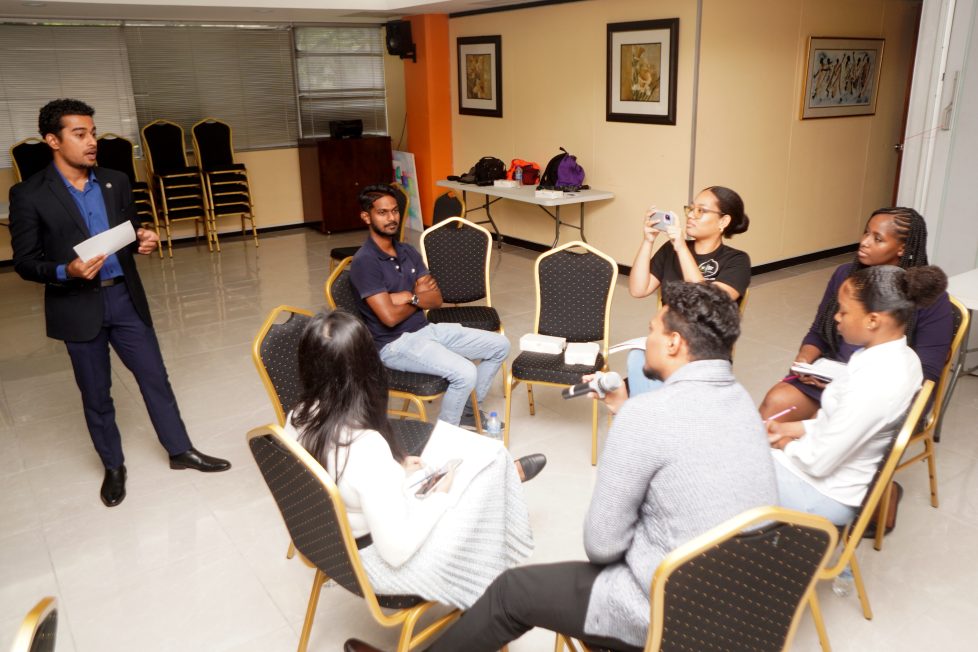

The UWI Tourism Society and the Academic Lounge recently examined the future of tourism at their event; “Redesigning Tourism: A Youth Perspective”. Hosted by the society’s president and vice president; Jalia Hutchinson and Irshad Mohammed, and moderated by Satesh Sookai from the Academic Lounge, the event brought together a diversity of perspectives from a panel of speakers with expertise across the spectrum of sustainable tourism studies. Discussions examined destination marketing, tourism competitiveness, climate resilience, entrepreneurship, artificial intelligence, food security, import dependence, and the development of stronger linkages within the tourism industry.
Miss Natalia Sandy merged her insight in tourism communications, and stakeholder engagement into a presentation that highlighted the importance of effective destination marketing in attracting visitors and strengthening the competitiveness of Trinidad and Tobago as a tourism destination. Her presentation emphasized that having attractive tourism products and experiences is not sufficient on its own; destinations must also communicate their unique value effectively to potential visitors. She shared insights into the work of Tourism Trinidad Limited particularly in relation to promoting Trinidad as a destination and creating greater awareness of the country’s tourism offerings. The discussion demonstrated the importance of strategic destination marketing in developing a strong destination identity and ensuring that Trinidad is effectively positioned within an increasingly competitive international tourism marketplace.
Ms. Sandy’s contribution also highlighted the importance of understanding target markets and developing marketing strategies that communicate the experiences and attractions that distinguish Trinidad from other destinations. Effective marketing can therefore contribute to increased visitor interest while also supporting the wider development of the tourism sector.
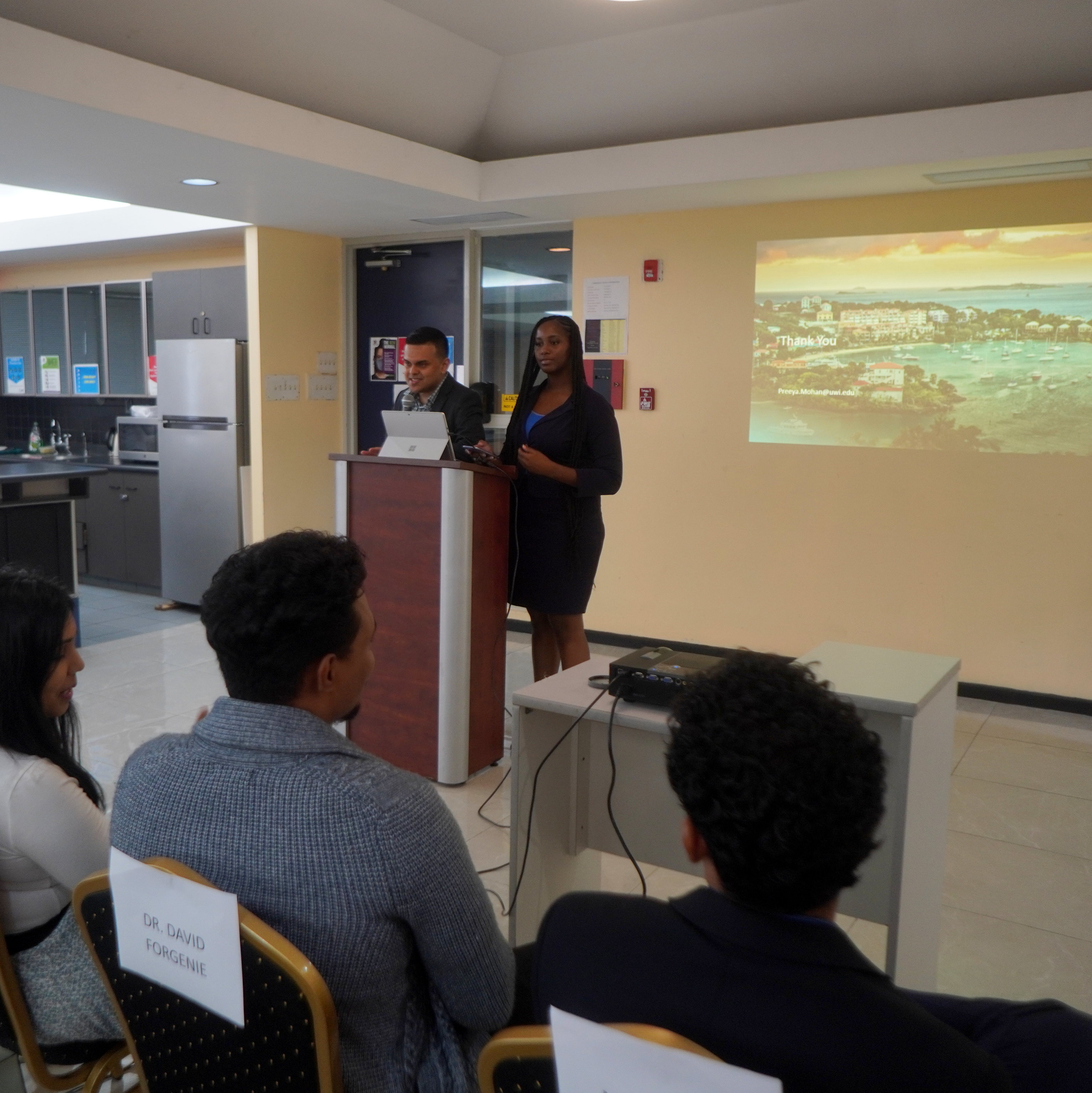
Dr. Preeya Mohan, whose work focuses on different facets of regional sustainability, addressed the topic Redesigning Caribbean Tourism: Pivoting from High Volume, High Leakage Mass Tourism toward High-Yield, Climate Resilient, and Tech-Enabled Niche Ecosystems. This presentation encouraged participants to reconsider conventional models of tourism development in the Caribbean. Particular attention was given to the limitations associated with relying heavily on high-volume tourism, especially where significant portions of tourism expenditure leave the destination through imports, foreign ownership, and other forms of economic leakage.
Professor Mohan further discussed the potential benefits of moving toward high-yield tourism, where greater emphasis is placed on attracting visitors who generate stronger economic value rather than focusing solely on increasing visitor numbers. This approach can involve the development of specialized and niche tourism experiences that appeal to particular visitor interests while creating opportunities for local businesses and communities.
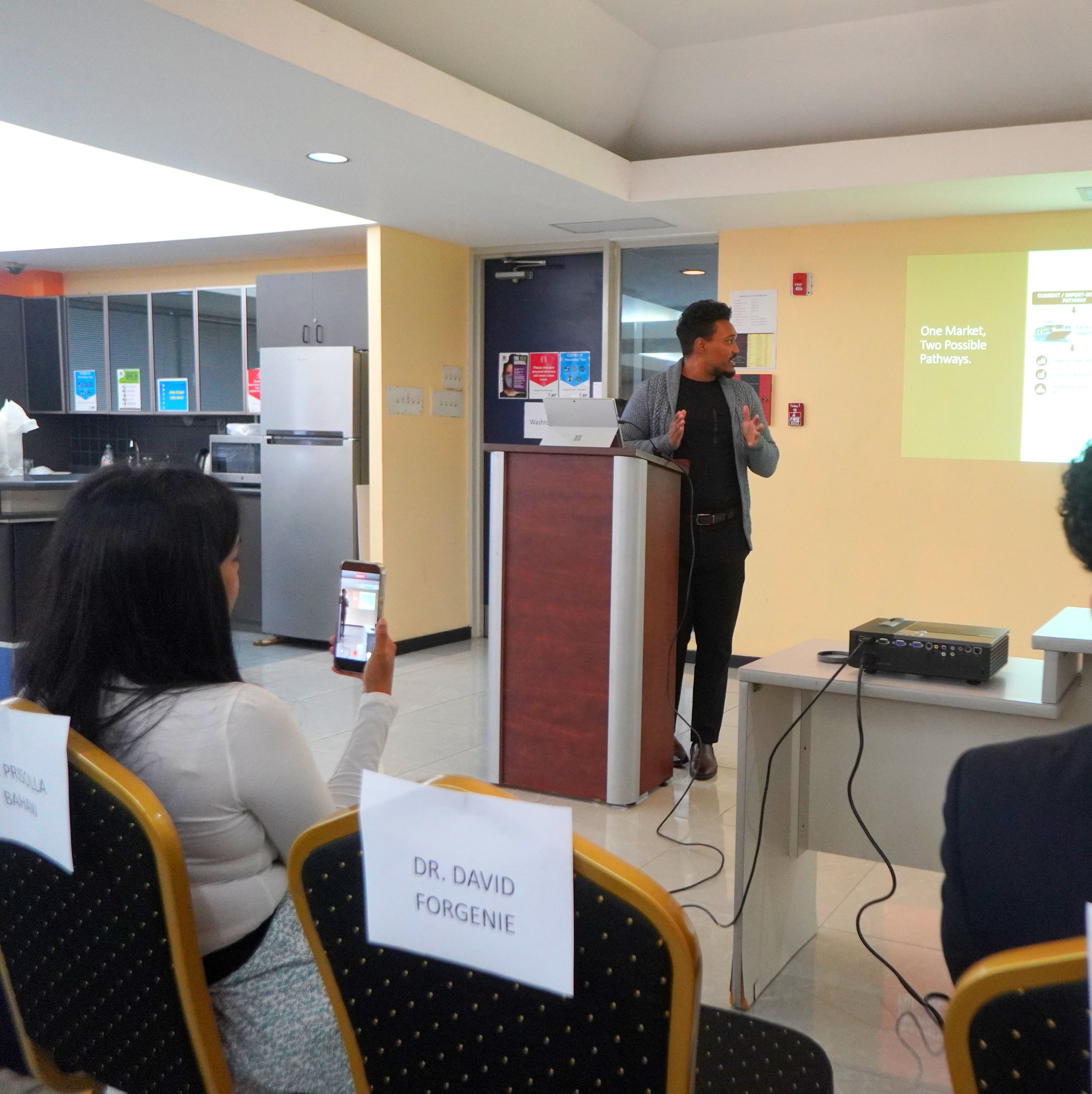
Dr. Priscilla Bahaw, a lecturer on entrepreneurship focused on the relationship between entrepreneurship and tourism, while also incorporating artificial intelligence into the discussion. Her presentation demonstrated how entrepreneurs play a role in developing new tourism products, services, experiences, and business opportunities. The discussion highlighted the importance of encouraging individuals to identify opportunities within the tourism sector and develop innovative solutions to existing challenges. Tourism entrepreneurship can contribute to diversification by creating experiences that move beyond traditional tourism offerings and respond to changing visitor expectations. In terms of the impact of artificial intelligence on tourism, Dr. Bahaw spoke about its potential in assisting tourism entrepreneurs in marketing, customer engagement, content creation, market research, personalization, and business decision-making.
Her presentation reinforced the idea that future tourism professionals and entrepreneurs will need to understand both tourism and emerging technologies. Developing these skills can enable entrepreneurs to identify new opportunities and create innovative tourism products that are relevant to changing market conditions.
Dr. David Forgenie, whose research examines the heavy reliance on imported food within the Caribbean presented; Redesigning Caribbean Tourism: Strengthening the Tourism–Food–Import Nexus. During this presentation, he examined the relationship between tourism, food production, and the Caribbean’s reliance on imported goods.
He highlighted the importance of strengthening linkages between tourism establishments and local food producers. Hotels, restaurants, cruise facilities, and other tourism businesses require significant quantities of food and other supplies. Increasing the participation of local producers in these supply chains can create greater opportunities for farmers, manufacturers, entrepreneurs, and other local businesses.
Strengthening the tourism–food nexus can also contribute to reducing economic leakage by retaining a greater proportion of tourism expenditure within the local economy. Greater use of locally produced food can simultaneously support domestic agriculture and enhance the authenticity of the visitor experience by allowing tourists to experience local products, cuisine, and culture. Dr. Forgenie’s presentation therefore emphasized the importance of viewing tourism as part of a broader economic system rather than as an isolated industry. Stronger connections between tourism and other sectors of the economy can contribute to more inclusive and sustainable tourism development.
The event concluded with a round table discussion focused on generating ideas for improving the state of the tourism sector in Trinidad and Tobago. The session provided an opportunity for participants to reflect on the issues raised throughout the event and consider practical approaches that could contribute to the advancement of the sector. The discussion was particularly fruitful, with participants sharing a range of perspectives and ideas relating to the future direction of tourism in Trinidad and Tobago. The exchange demonstrated the value of bringing together different voices and areas of expertise when addressing complex tourism challenges.
Among the broader themes emerging from the discussion were the importance of effective destination marketing, innovation, entrepreneurship, technology, climate resilience, stronger local economic linkages, and reducing dependence on imported goods. Participants also recognized the need for greater collaboration among tourism stakeholders to develop solutions that are responsive to the needs of Trinidad and Tobago.
The round table created an interactive environment in which participants were able to engage with the ideas presented by the speakers and contribute their own perspectives. The resulting discussions were informative and provided valuable insight into both the challenges facing the tourism sector and the opportunities available for its future development.